

Why monsoon storms expose leaks
From July into September, afternoon storms can bring heavy rain driven by strong gusts. Water hits walls that stay dry the rest of the year, and it gets pushed into gaps that normal rain never reaches. That's why a window can seem fine for months, then leave a stain after one storm.
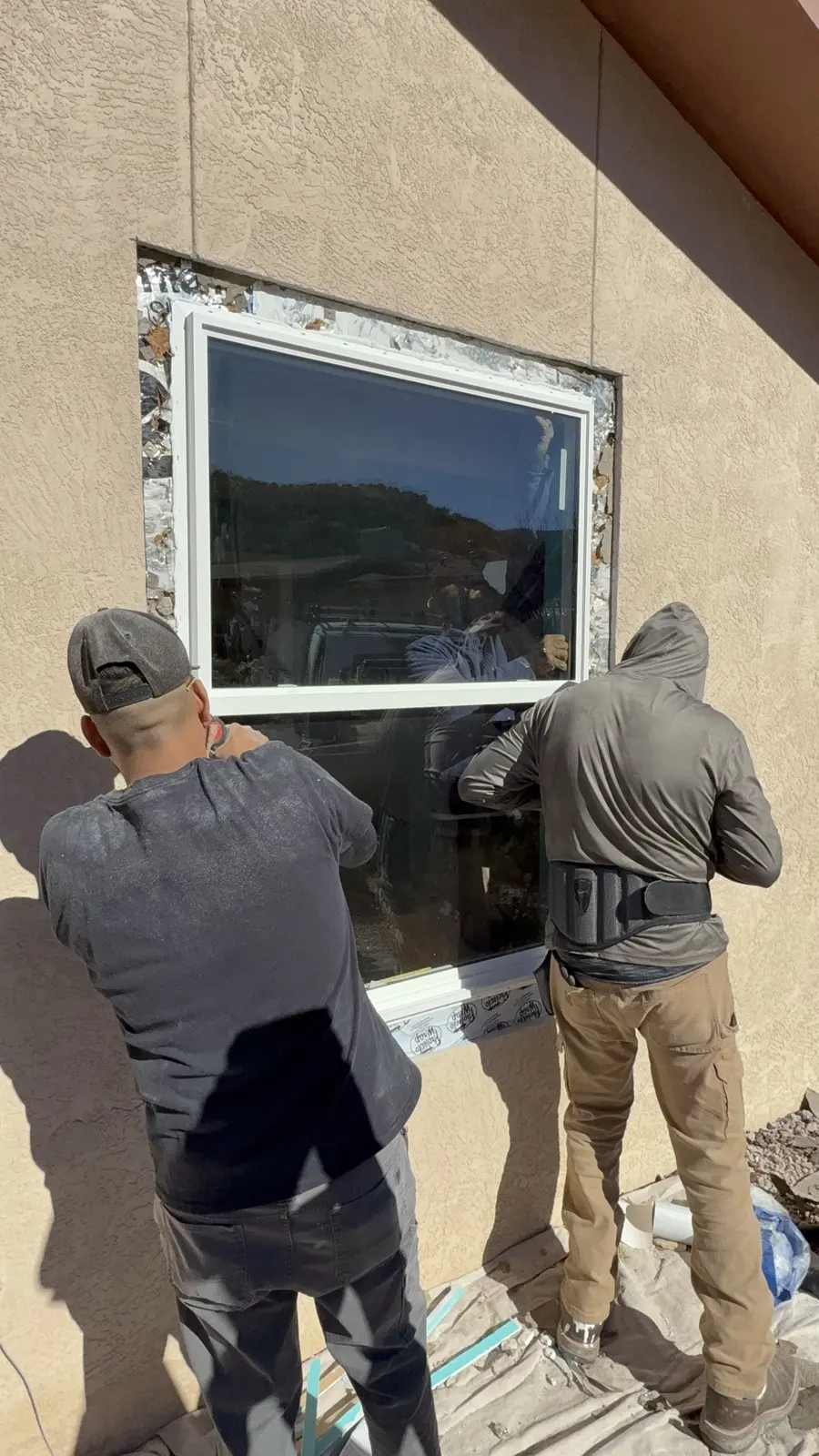
Where the water actually gets in
- Failed sealant between the frame and the stucco, cracked by years of sun.
- Missing or reversed flashing above the window, sending water behind the stucco instead of out.
- No sill protection, so water that gets past the frame soaks the wall below.
- Clogged weep holes in the window frame, so water in the track has nowhere to drain.
- Cracked stucco near the corners of the opening.
Quick checks
Clear the weep holes at the bottom of the frame. Look at the outside sealant for gaps or cracks. Check for stucco cracks running from the window corners. Small sealant gaps can be touched up; cracked stucco and interior stains usually mean water has been getting behind the frame.
The real fix
If stains keep coming back, the water is likely getting behind the stucco at the flashing. Full-frame replacement lets us remove the old window, repair any damage, install a sloped sill flashing, and tape the new window in properly from the bottom up. That stops the leak at the source.
Seeing stains after a storm? Call (505) 578-2910.
Questions we hear about this
Why does my window only leak in summer storms?
Wind-driven monsoon rain reaches gaps that ordinary rain doesn't, exposing weak sealant or missing flashing.
Can caulk fix a leaking window?
Sometimes, if the problem is a small sealant gap. Recurring stains usually mean the flashing behind the stucco has failed.