

What's happening
Warm indoor air holds moisture. When it touches a surface colder than its dew point, the moisture condenses into droplets. On a cold valley morning, the coldest surface in most rooms is the window glass, or the window frame if it's aluminum. That's where the water shows up.
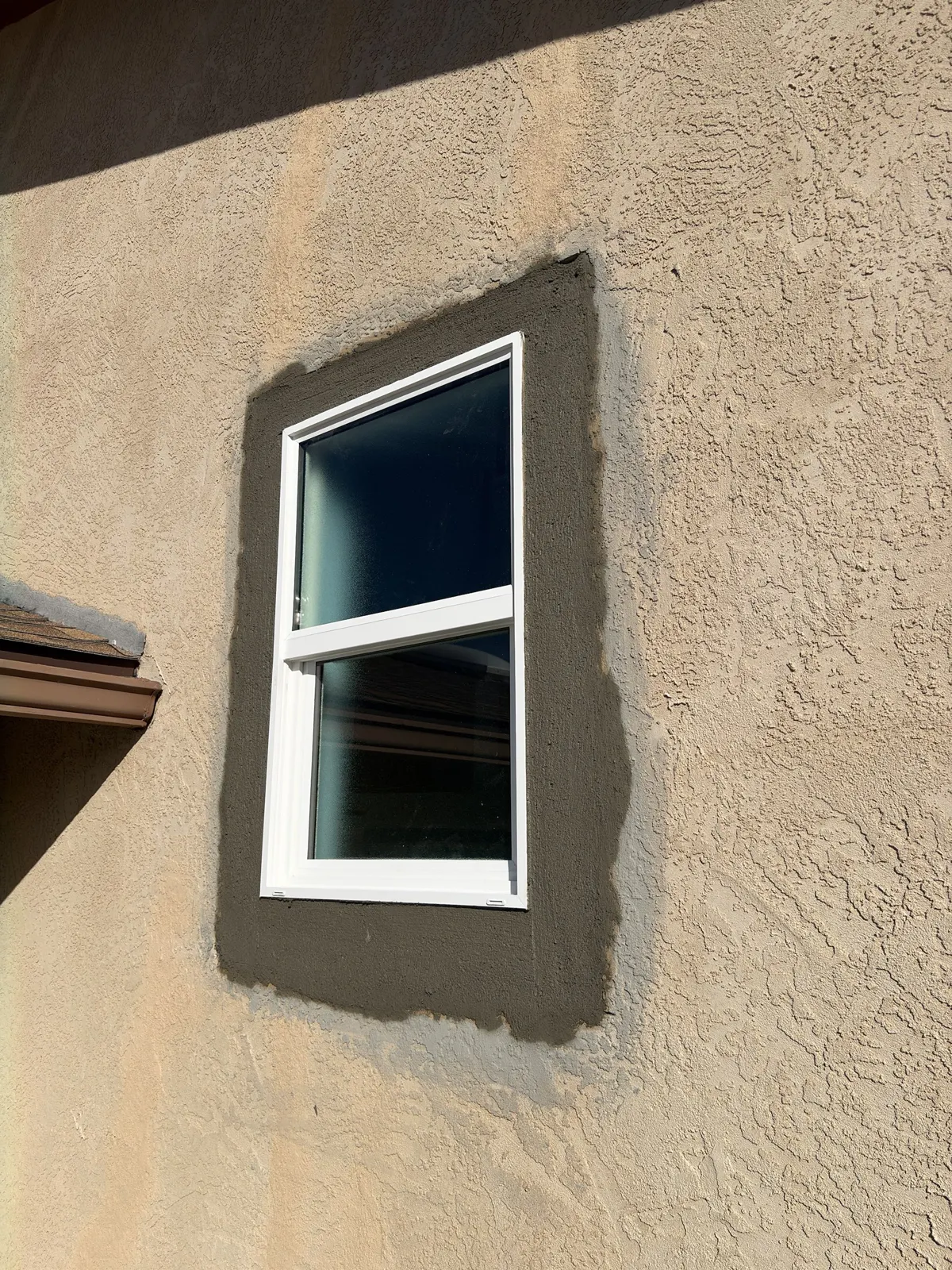
Where the water is tells you what's wrong
| Where you see it | What it means |
|---|---|
| Inside surface of the glass | Cold glass plus indoor humidity. Common with single-pane or older dual-pane windows. |
| On aluminum frames | The frame conducts outdoor cold straight into the room. |
| Between the panes | The glass seal has failed. The unit needs replacing. |
| Outside surface on cool mornings | Usually a sign of good insulating glass. Nothing to fix. |
Why it matters
Repeated condensation runs down onto sills, where it stains paint, swells wood, and can feed mold on the drywall below. In older valley homes with wood sills, years of winter condensation can do real damage.
How to reduce it
- Warmer glass: modern dual-pane Low-E glass with warm-edge spacers keeps the inside pane much warmer, so condensation is far less likely.
- Non-conducting frames: vinyl and fiberglass don't carry cold the way aluminum does.
- Lower humidity: run bathroom and kitchen fans, and use humidifiers sparingly in winter.
- Air movement: open blinds and curtains on cold mornings so room air reaches the glass.
When it's time to replace
If you have aluminum frames dripping every winter morning, single-pane glass, or fog between the panes, replacement is the long-term fix. Call (505) 578-2910 for a free visit.
Questions we hear about this
Is condensation on the outside of my windows bad?
Usually not. It often means the glass is insulating well enough to keep the outer pane cold.
Will new windows stop all condensation?
They greatly reduce it. Very high indoor humidity can still cause some on the coldest mornings, so ventilation helps too.