
When full-frame is the right call
- Water stains, swelling or soft spots below the window, inside or out.
- A frame that's rusted, cracked, warped or pulling away from the wall.
- An opening that's settled badly out of square.
- You want a bigger or smaller window, or a door where a window used to be.
- A previous replacement was installed without proper flashing.
Step by step
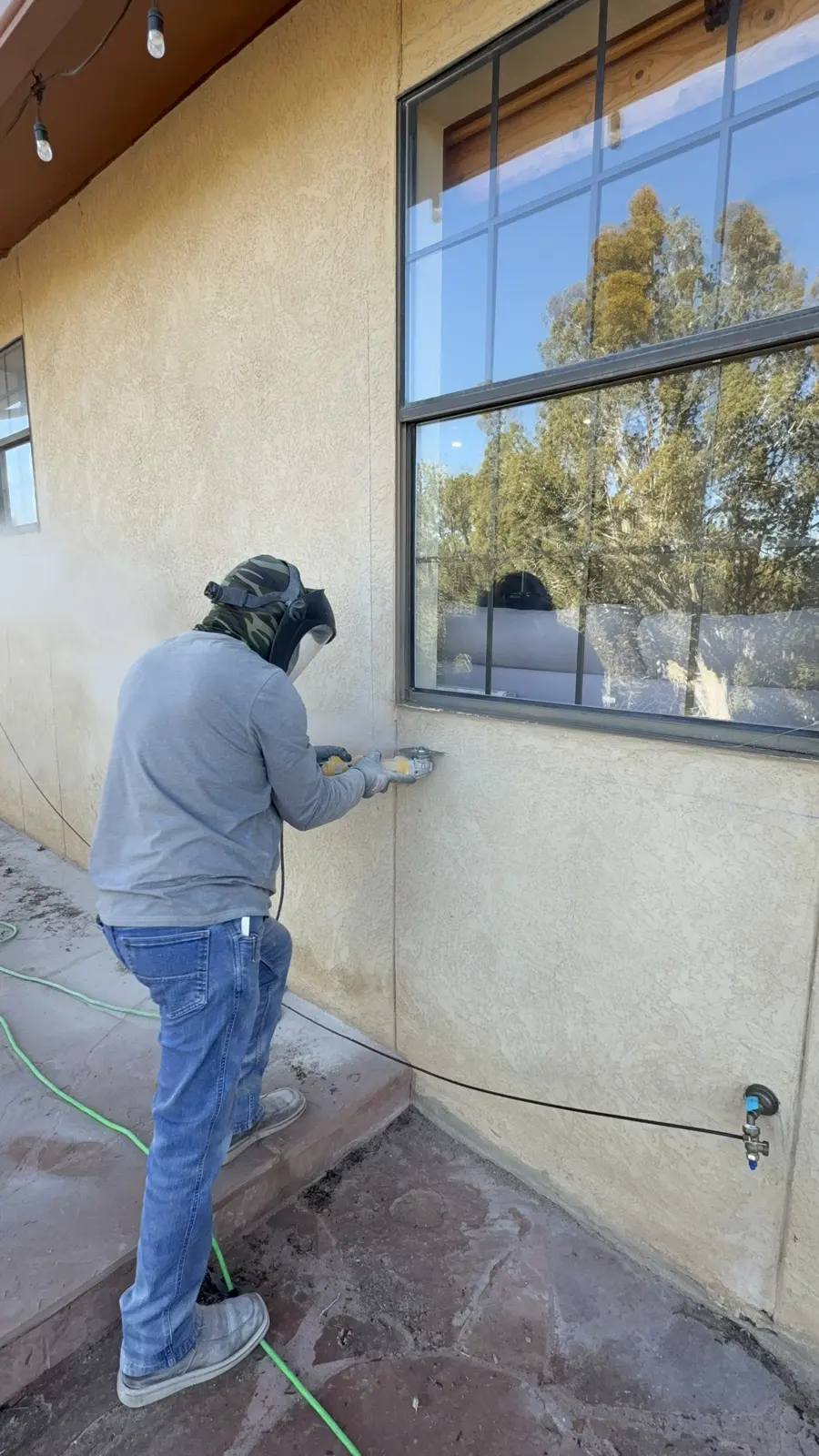
- Cut the stucco. Lines are marked around the old window and the stucco is cut cleanly along them, wide enough to free the old nailing fin.
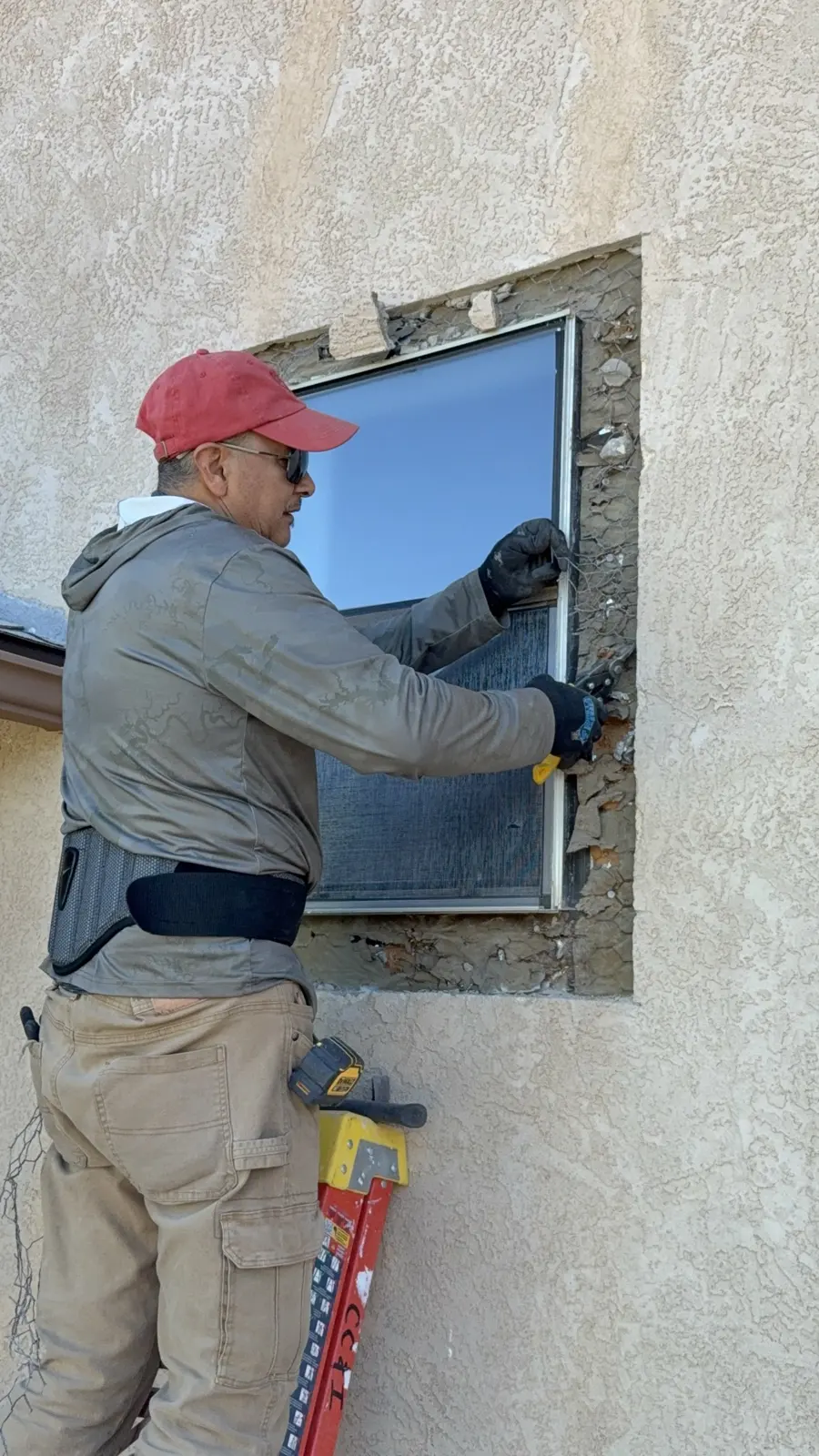
- Remove the old window. With the fin exposed, the old unit comes out of the wall.
- Look at the framing. We check the sill, the studs and the header. Damage is shown to you and repaired before we continue.
- Square the opening. In settled houses, shimming or reframing the rough opening may be needed so the new window can sit level and plumb.
- Protect the sill. A sloped, sealed sill flashing directs any water that reaches the bottom of the opening back outside.
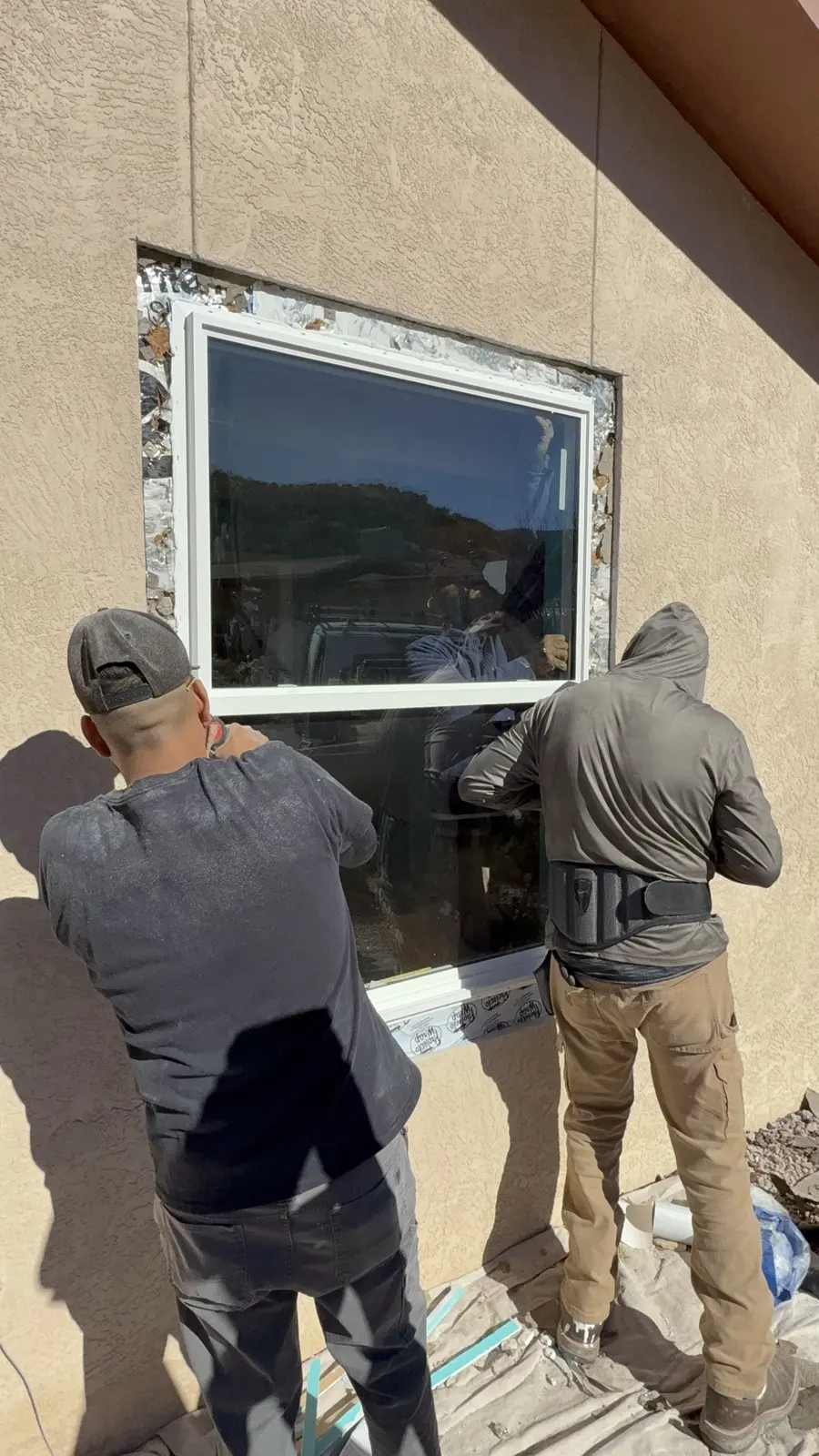
- Set and fasten. The new nail-fin window is set, checked for level and square, and fastened.
- Flash the fins. Self-adhered tape goes on in the correct order: sides, then head, each layer over the one below.
- Rebuild the stucco. Paper and lath tied into the existing wall, base coats, then a color coat matched to your wall.
Why sequence matters
Water runs downhill, and the flashing has to be layered like shingles so every piece overlaps the one below it. Get the order wrong, with the head flashing tucked under the paper instead of over it or the side tape lapped under the sill, and water gets channeled behind the stucco instead of out of the wall. That's how leaks start under brand-new windows. We follow the sequence on every opening, and we're glad to show you photos before the stucco covers it.
About the stucco patch
The patch goes on in layers. The first coats are gray and need to cure before the final color coat. The color coat is matched to your wall as it looks now, faded or not, and textured to blend. On a wall with lots of fading or old patches, we may suggest re-coloring a full section so no outline shows. We'll discuss that before the job starts.
Weather and timing
Windows can go in year-round, but cement stucco shouldn't cure in freezing weather. On cold-weather jobs we may install and seal the windows, then come back for the stucco during a mild stretch. The openings are fully closed and protected in the meantime.
Photos you can keep
Once the stucco goes back on, the flashing work disappears for good. If you'd like, we'll photograph each opening after flashing and before stucco so you have a record of what's behind the wall, useful for your own peace of mind and for future buyers.
Before you decide
How long does a full-frame window take?
Setting the window is usually done the same day. The stucco needs cure time between coats, so the finished color coat may come a few days later.
Will the patch be visible?
The goal is that it isn't at normal viewing distance. We match color and texture, and on heavily faded walls we may recommend re-coloring a larger section.
What if you find rot inside the wall?
We stop, show you, and give you a price to repair it before going further. Nothing is covered up.
Can a settled opening be made square again?
Often, yes. With the old frame out, we can shim or reframe the rough opening so the new window sits level and plumb.